

Walking along a shore and looking at objects carried onto the sand by the sea current. Seeing these objects slowly piling up, one on top of the other, constructing something day after day. Organic matter mixes with residues of artificially produced goods. Colors vanish. Distinctions between the natural and the man-made disappear. Geological time blends with the capitalist one. The pace of local waves interacts with the rhythm of global systems of consumption, forming new conglomerates or new “things” that respond to the collapsing of time and space. This process opens up interstitial dimensions through which to view the world from delocalized angles.
Approaching the work of the Ozhopé collective requires awareness of invisible structures that operate in the “here and now” as much as in the “before and after.” These structures exist in a constant state of potential visibility, deeply nested in the tense weaving of the global socio-economic fabric. Ozhopé has developed a methodology centered on physical presence to identify and confront these structures, exploring how they strip agency from those who inhabit this fabric. To do so, they immerse themselves in specific contexts and adopt a situationist practice. Even as mere observers, the presence of Ozhopé’s members is enough to unravel social textures, cultural frictions, and economic asymmetries.
The words "looking" and "seeing" intentionally initiate this inquiry into their work. These words imply eyes, epidermic interfaces, collective senses, and the anthropological concept of “observant observation.” Observe yourself in the process of observing. Identify yourself as part of the context to picture the whole. In this situation, they search for interpretative forms of understanding that are neither a priori nor posthumous, but rooted in witnessing epiphanies, where complex interactions are exposed to sunlight.
To understand Ozhopé, one must look at the soil from which they grew. Founded in 2017 in Malawi, the collective emerged from a desire to feel and learn how to see, rather than to control the variables that make hidden relationships materialize. In that sense, Ozhopé describes itself as a group of "thinkivists" who treat the Malawian landscape as a living laboratory. The group comprises a diverse array of Malawian intellectuals and artists, including visual artist Massa Lemu, writer Emmanuel Ngwira, photo-videographer Tavwana Chirwa, and artists Ella Banda and Paul Chimbwanya.
Their collaboration is defined by a "biopolitical collectivism," a practice that centers the human subject within the larger landscape of capitalism and ecology. In this light, listing the members and their hypothetical roles feels reductive. Ozhopé functions like a porous organism; the group allows members to move in and out of the membrane that holds them together. It adapts, both in terms of the practitioners who shape the art practice and the process of letting the context, the people, and the events around them become active variables in a self-unfolding response to creation.
The name Ozhopé itself carries the weight of a communal philosophy, deriving from the Yao word wosopé, which translates to "all of them." The story of the name tells of a young boy who, upon seeing the artists working together on the shores of Lake Malawi, used the word to describe the blurring of individual identities into a single, collective force. Being, waiting, looking, and listening become tools to perceive the "unseeable net" that intertwines Lake Malawi with global society. This ethos problematizes the concept of authorship in favor of the role of a facilitator: an entity that activates hidden mechanics to outline them through multiple means.
A concise definition of the collective’s approach is found through the perspective of a “time and space conversational methodology.” This multidimensional dialogue reveals the global interplay occurring in the fishing villages of Mangochi and Senga Bay, which often serve as the production and exhibition theaters for the collective’s interventions. By establishing a practice rooted in rural coastal areas, Ozhopé collapses the distance between theoretical inquiries, personal experiences, and shared feelings as they relate to the impact of imperialist policies at both micro and macro scales. Their practice feels like an act of “experiencing the letting happen,” developed to create forms of "re-existence" for the things and people around them. This process allows a temporarily expanded community to organically reclaim collective agency over objects and situations in the face of an externally imposed order of meaning.
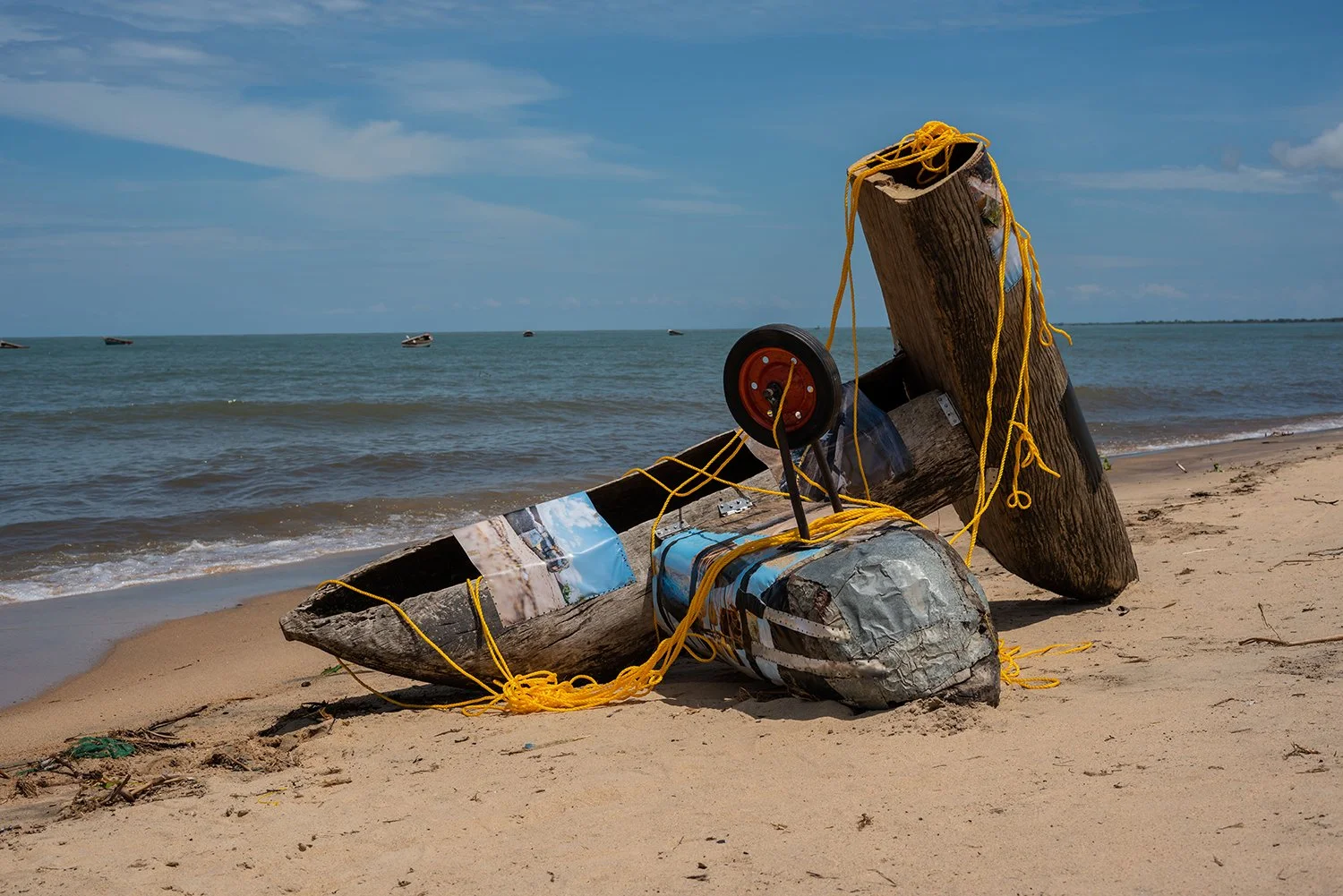
One recurring presence at the core of their research is the dugout canoe, or bwato. This vessel is an enduring symbol of Malawian life, an organic technology carved from massive tree trunks, representing a lineage of knowledge and labor that stretches back centuries. Yet, in the hands of Ozhopé, the bwato stands as a scarred, mutated object. For them, the canoe encompasses its role as a fishing tool, all the while becoming more like a text capable of assembling past, present, and speculative futures. The vessel serves as a narrative stratificational object for studying the contemporary "sedimentation" of cultural and economic remains over time, made visible through layering processes. This effect stems from the repair process adopted by the village fishermen. When the canoe is damaged or starts to rot with age, its body is repaired using found materials collected from the waters of Lake Malawi.
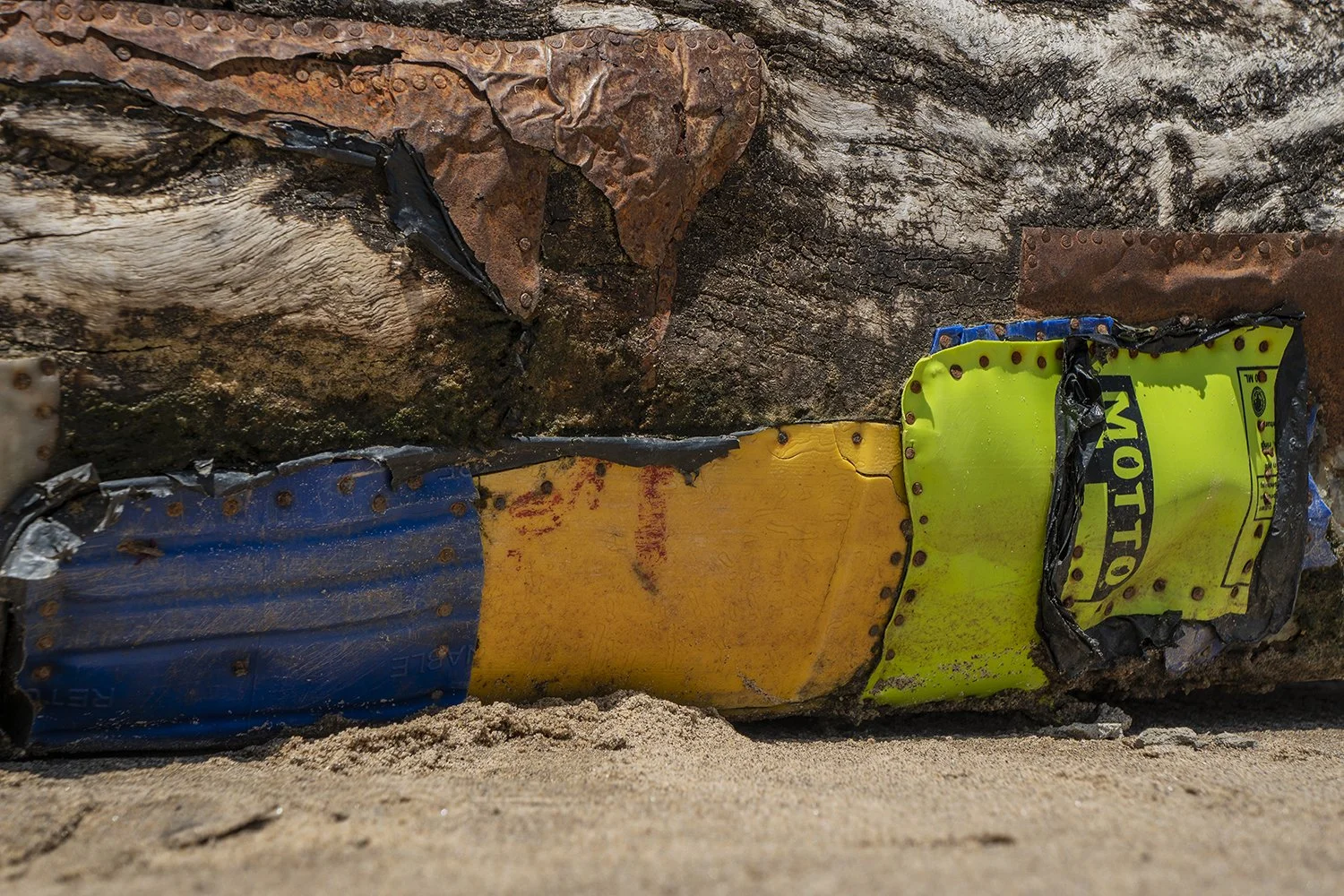
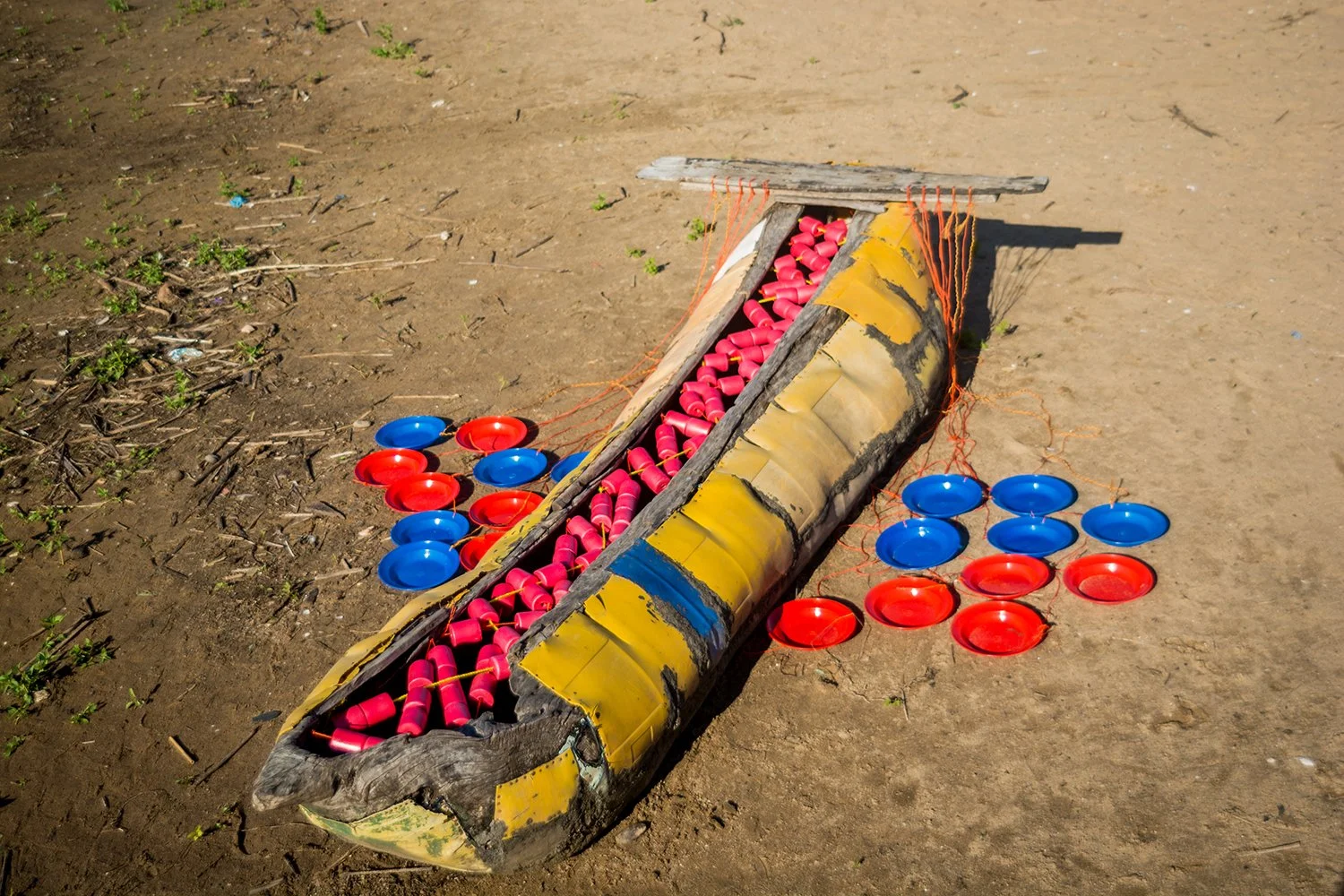
The canoe becomes a canvas on which materials like USAID vegetable oil tins are nailed to seal holes and cracks in the hull. Metal cut-outs mix with plastic, wood, and paint, creating a Gestaltian text where overlapping textures allow transnational languages to emerge. Paraphrasing Ozhopé, these repairs are traces of a "racial capitalocene," where the remnants of international aid and industrial waste are grafted onto ancient technology. Patching the canoe preserves its utility while expanding its aesthetic potential, a process exemplified in Ozhopé’s Cimawamawa/Bringer of Good Tides (2025). In this work, the patches represent the primary functional transformation of the vessel, performed by the fishermen themselves. This modification grants the collective the permission to treat the canoe as a playful cultural object. They add horn speakers on an improvised mast and bicycle wheels, suggesting movement on solid ground, but they also leave a significant portion of the hull unrepaired, underlining an evolutionary process in which the canoe moved from a marine entity to a terrestrial one.
This friction between organic wood and the industrial patches recalls the fragmented experience of reality for much of the world's population. In her work The Virtual Window: From Alberti to Microsoft, media theorist Anne Friedberg explores how seeing the world has shifted from the single-frame perspective of the Renaissance to the fragmented, multi-layered experience of the digital age. Alberti’s window was a metaphor for a clear, unified view of reality, a stable perspective that placed the observer in a position of mastery. However, Friedberg argues that the modern computer screen, with its overlapping windows and multiple simultaneous streams of information, has shattered this unity. We now live in a world of "windows over windows," a state of constant fragmentation where different temporalities and locations compete and delocalize our positions.
The dugout canoe appears as a physical manifestation of this digital window experience, inserted into the rural landscape of Lake Malawi. The patches on the hull do not blend into the wood; they sit on top of it, creating a "glitched" surface that mirrors the aesthetic of a computer desktop. Each USAID tin patch is a pop-up window that shows the capitalist history of international aid, juxtaposed with the wood as the ancestral connection to the use of the lake as a source of sustenance. The canoe is no longer a solid, analog object; it is a montage resulting from a bricolage practice, as conceptualized by French anthropologist Claude Lévi-Strauss. In his seminal text The Savage Mind (in the sense of untamed human thought), the anthropologist describes the bricoleur as a figure who works with "whatever is at hand." The bricoleur’s tools and materials are never perfectly suited to the task; they are the leftovers of previous activities, a closed set of remnants that carry their own histories.
The word “remnants” is very important. These canoes display residual images from both outside and inside Malawi’s borders. They are assemblages of “poor images,” objects characterized by a low-res appearance due to digital information loss, to quote Hito Steyerl. Just as a “poor image” is a low-quality digital file that has been compressed, copied, and circulated until it loses its original resolution, these patches are the physical files of global trade. They have been battered by the lake and the sun, losing their original commercial luster but gaining a new, subversive power through their very degradation. Plastic, metal, and rubber are discarded into the lake, where they mutate and develop a worn-out aesthetic that carries a story conveyed through canoe patches.
A deconstructed visuality emerges, generating new narratives and economic values. Just as we navigate digital screens through fragmented interfaces, the fisherman navigates the lake through a fragmented, glitched vessel. The so-called clear view promised by the Renaissance window is revealed to be an illusion. What remains are the multiple low-res windows of the bwato, where survival depends on the ability to see and navigate the conflicting structures of rural-capitalist reality.
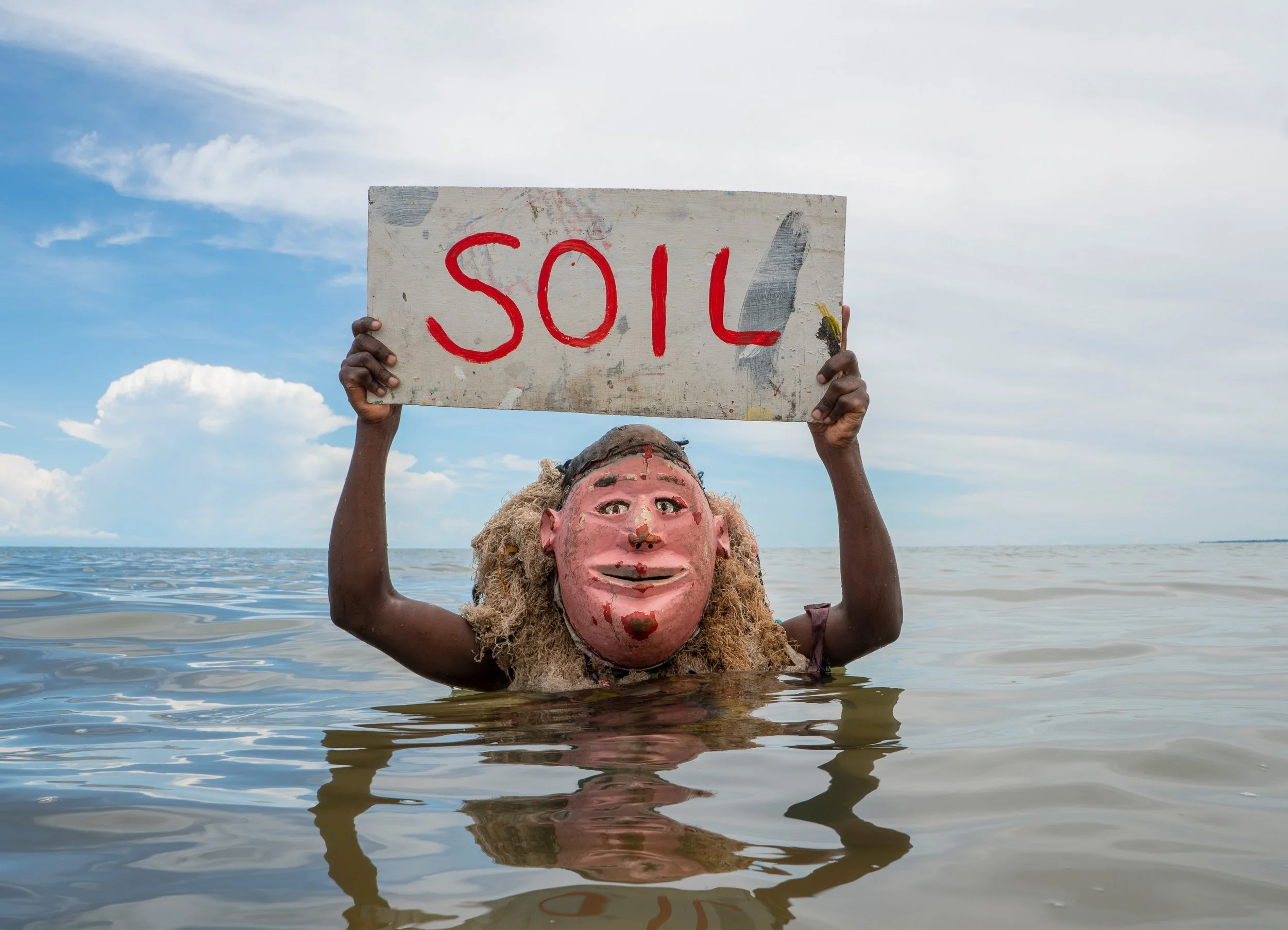
The symbolic value of the canoe is artistically translated into various interactions developed by the collective on Lake Malawi between 2017 and 2025 (with their last project at Chintheche in Nkhatabay). The work ROW is a rich introduction to the collective's underlying dialogic and aesthetic mechanics. This piece is a single-channel video divided into five chapters. The journey begins with a silent canoe crossing the screen, where a male figure in a suit has his face replaced by the red "Simoni" mask of the Gule Wamkulu tradition. This mask has been connected to satirizing white men, though here it takes on a new role, embodying the mystical presence of a global corporate entity.
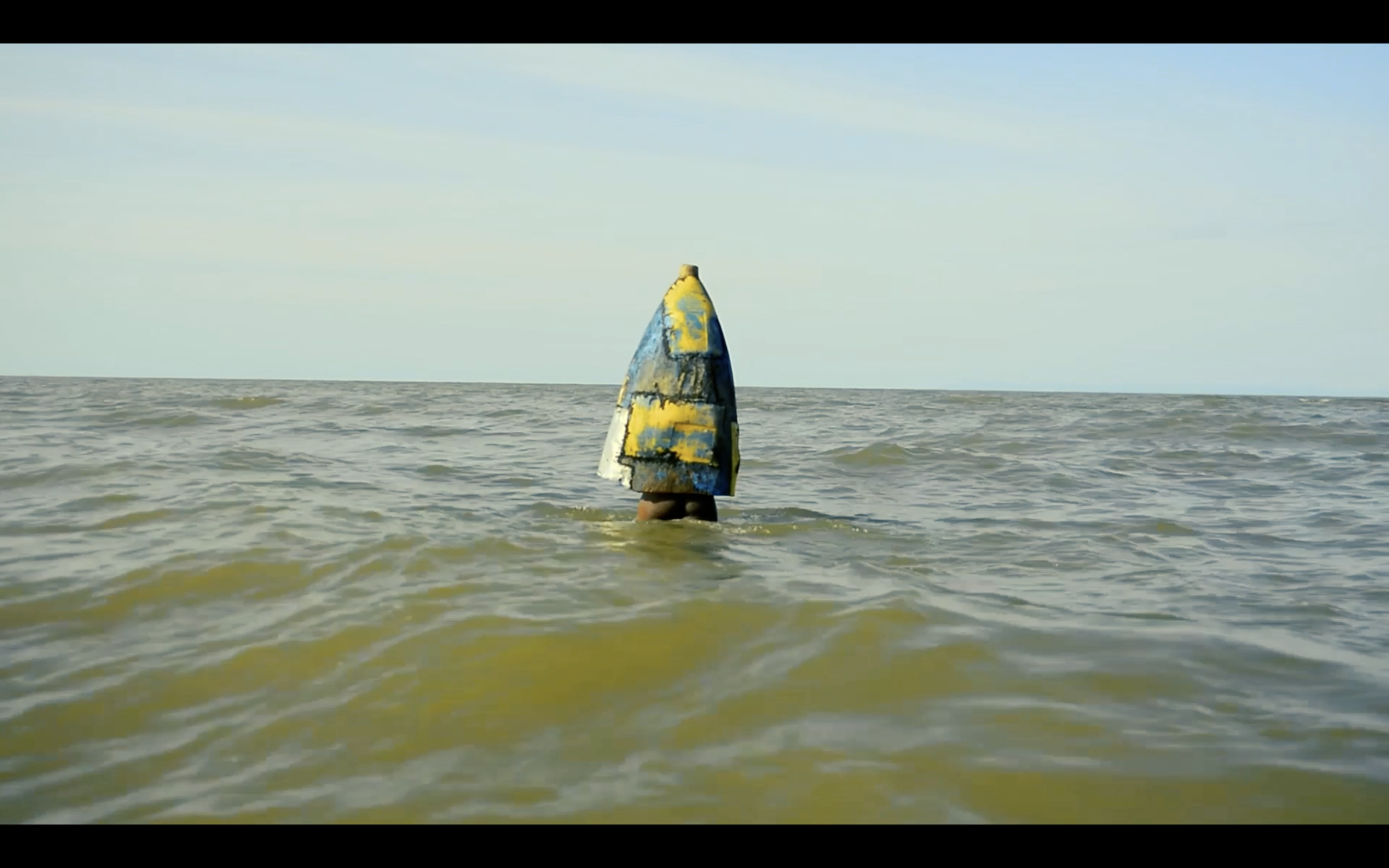
The silence is then shattered by the rhythm of a repetitive performance. The mask is now gone, but the business suit remains on a character who stands waist-deep in the lake. This figure strikes the water with a paddle, generating a splashing noise. He accompanies this gesture by repeatedly shouting "eya" (yes) and "ayi" (no). It feels like watching a parody of a made-up struggle. It is the mise en abyme of a governance attitude, in which authorities oscillate between constructed forms of consent and denial. The feeling is one of play, devoid of sincerity, driven solely by the search for self-justification and public approval. Considering Lake Malawi's history, it is inevitable to see this as a reflection of neocolonial oil deals in the area and the neglect of the environment's actual needs.
This absurdity curdles into a visionary image as the scene shifts to a dystopian future captured in a neorealist fashion. In the muddy waters of the lake, children appear wearing gas masks. The situation feels game-like, inserted in the scenario of a post-apocalyptic struggle. We watch these kids tussling over a single canoe in a world where the air has turned hostile. The boundary between playing and fighting becomes uncertain. We witness a contemplation of a future shaped by an invisible environmental collapse, where the next generation is left to inherit the wreckage of a consumed world.
The gaze returns to the canoe, now stuck and immobilized. A man wears the Simoni mask again, but the business suit is gone. We see the skin of his torso. We see a canoe stranded. We see the plastic patches on its hull. We see a man paddling in the sand to the rhythm of the background music. Something has shifted. A certain mindset has been acquired, generating a loop of colonial dependency from which it is difficult to escape. The lake is no longer in sight; it feels far away, almost suggesting it has been taken or moved. We are on land with no possibility of going anywhere.
Row plays ambiguous chords even in the fifth and final chapter, suggesting both resistance and surrender. A half-canoe is animated by an anonymous body. This piece of a vessel becomes an armature, a roof, or perhaps the other half of a new organic being with legs. We follow this hybrid entity, somewhere between a mythological hermit crab and a ritualistic costume, as it enters the waters of Lake Malawi, then disappears. Wood, plastic patches, and a body are swallowed by the current. The lake becomes the custodian of their symbolism, their time, and their space. The lake preserves and dissolves the past, present, and future; the objects, the practices, and the bodies. It suddenly moves from being the theater to being the protagonist of the political dynamics.
The last image of ROW is the lake and only the lake. Protagonist and theater merge, serving as both a witness and a mute narrator of a fragmented history. The lake hosts Ozhopé and also swallows it, dissolving expanded members' identities into a collective and ecological narrative that reclaims agency through the very acts of being, waiting, and looking. Apparently, the tools to see the invisible structures.
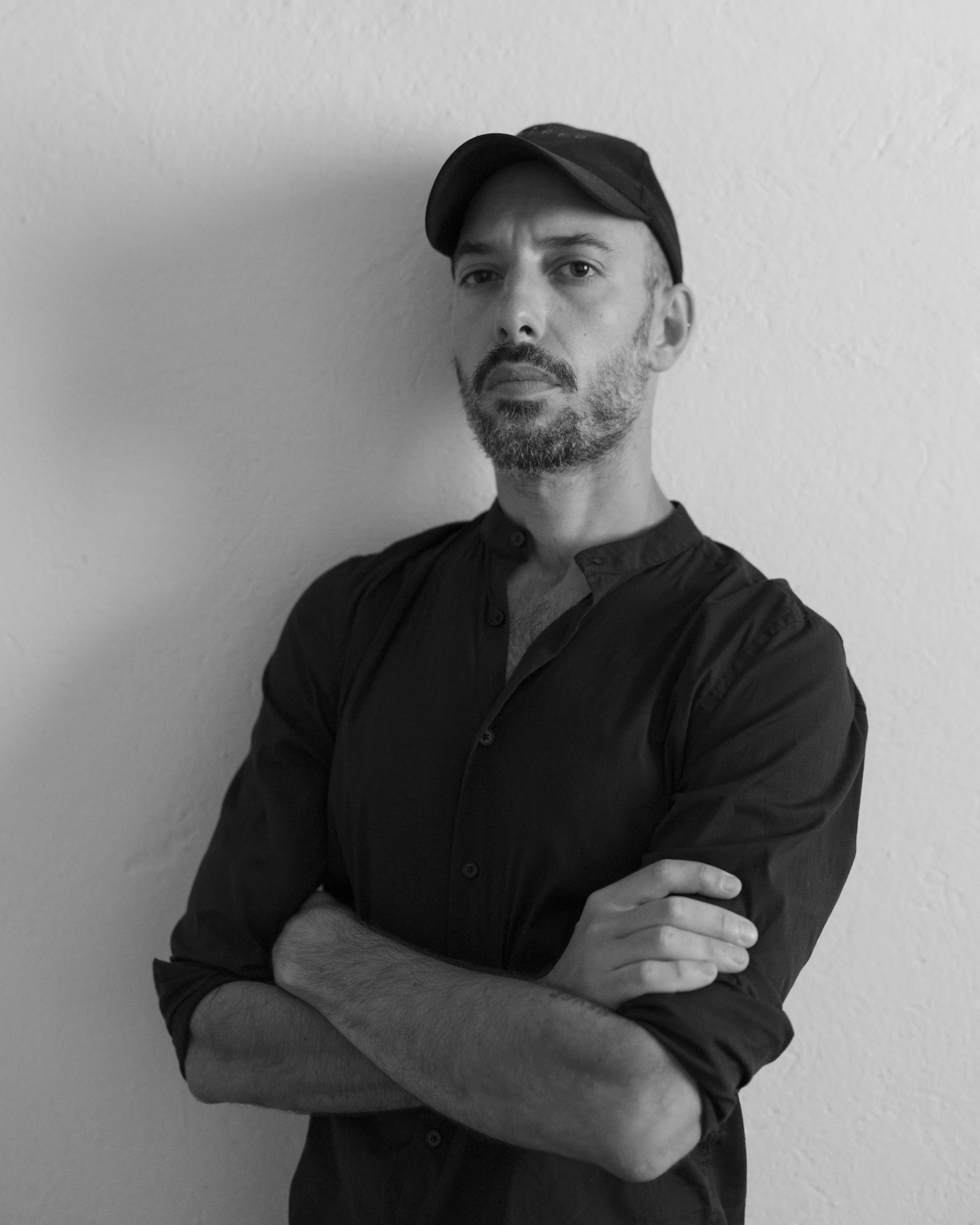
Luca Spano,
April, 2026.
—————————-
Bibliography
Anderson K. (2015). Ethics, Ecology, and the Future: Art and Design Face the Anthropocene. Leonardo 48 (4): 338–347
Fisher M. (2008). Capitalist Realism: Is There No Alternative?. Zero Books
Friedberg A. (2006). The virtual window: from Alberti to Microsoft. MIT Press
Lemu, M., & Ngwira, E. (2019). Row: a thinkivist art intervention. Nordia Geographical Publications, 47(5), 39-54.
Lèvi-Strauss C. (1994). The Savage Mind. Weidenfeld & Nicolson
Steyerl H. (2009). In Defense of the Poor Image. e-flux journal #10
—————————-
Image List
All images courtesy of OzhopéImage 1 - Submergent Poetry — Soil — 2022
Image 2 - Cimawamawa - Bringer of Good Tides— 2025
Image 3 - Dugout Canoe (detail) — 2022
Image 4 - ROW 1.
Image 5 - Ancestral Spacetime Shuttle — 2023
Image 6 - ROW: A waterlogged anti-patois-bourgeois epic in 5 parts — 2023 (still from part 4)
Image 7 - ROW: : A waterlogged anti-patois-bourgeois epic in 5 parts — 2023 (still from part 5)
The Ozhopé collective is Tavwana Chirwa, Desderio Galagade, Hamilton Kameza, Massa Lemu, and Duncan Mabvuto. Ozhopé has also been Ella Elidas Banda, Paul Chimbwanya, Prudence Chivasa, Augustine Magolowondo, Emmanuel Ngwira, and Trevor Sindo. Ozhopé is the mtondo makers of Zalewa, the potters of Namadzi, the fishers of Lake Malawi, and all those who contribute in various ways to our creative processes.